Why is my visibility dropping on a specific topic?
A drop in visibility on one topic is usually signal, not a bug — here's how to read it.
A drop in visibility on one topic is usually signal, not a bug — here's how to read it.
First, check that the drop is real
AI answers vary from run to run, so your Visibility score pools the last 14 days of answers and comes with a range. Before looking for a cause, read the top of the Visibility page:
- "No clear change vs 14 days ago": the score moved less than its margin. That is noise, not a drop.
- "Probably down, not confirmed yet": the score left its range, but not for a week yet. Watch it; do not act on it.
- "Down vs 14 days ago": a confirmed drop. It left its range and held.
- A GetMint Sentinel marker on the chart: the AI engine changed that day and every tracked brand moved together. That is the model, not your visibility; a move within 3 days of it is too soon to call.
- A wide range (above ±15 points), from few prompts or a narrow tag selection: too uncertain to act on. With fewer than 10 tagged prompts, select more tags.
A confirmed drop usually means one of these:
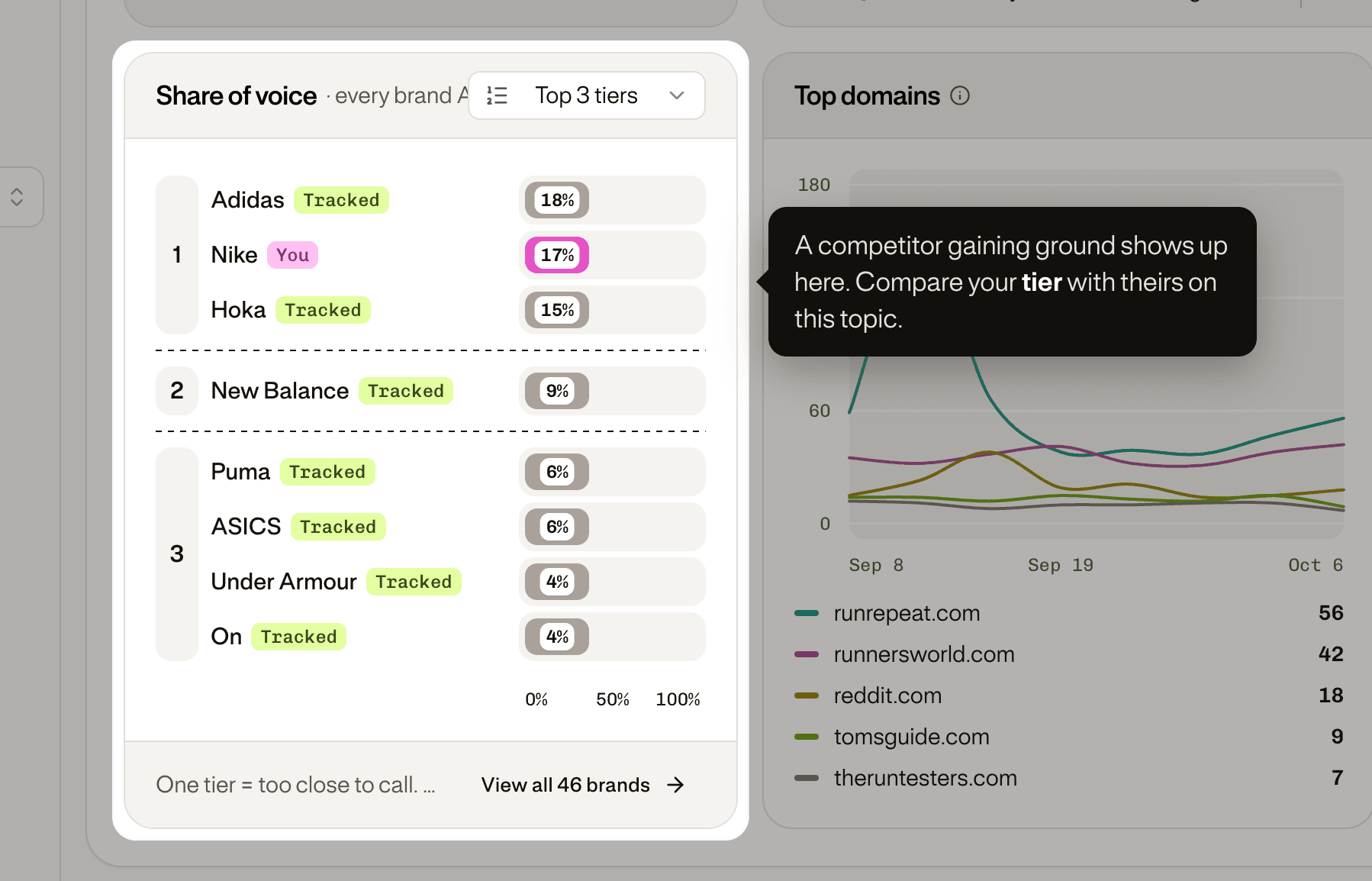
- A competitor gained ground. Another brand is now being cited more often for those questions, pushing you out of the answer. Check your Share of Voice for that topic to confirm.
- Your source content went stale. AI engines lean on fresh, authoritative pages. If your content on that topic is thin or outdated, models pull from stronger sources instead.
- The questions themselves shifted. AI answers evolve as the models update. A phrasing that surfaced you last month may now surface someone else.
What to do:
- Open the topic and look at which sources the AI cited — that's your most actionable clue.
- Compare against the competitors now appearing. What do their cited pages cover that yours don't?
- Strengthen or publish content that directly answers the question, then judge the result about two weeks later, once the score has pooled the new answers.
Improving measured visibility is a content-and-authority effort: expect a few weeks for early movement and a few months for durable gains.
Read by model — where exactly did the drop land?
A drop is rarely uniform across AI engines. Open Brand Visibility by Model (or filter the page by model) and look at each engine's range on its own. A single model has fewer answers, so its range is wider: when two models' ranges overlap, neither sets your brand apart.
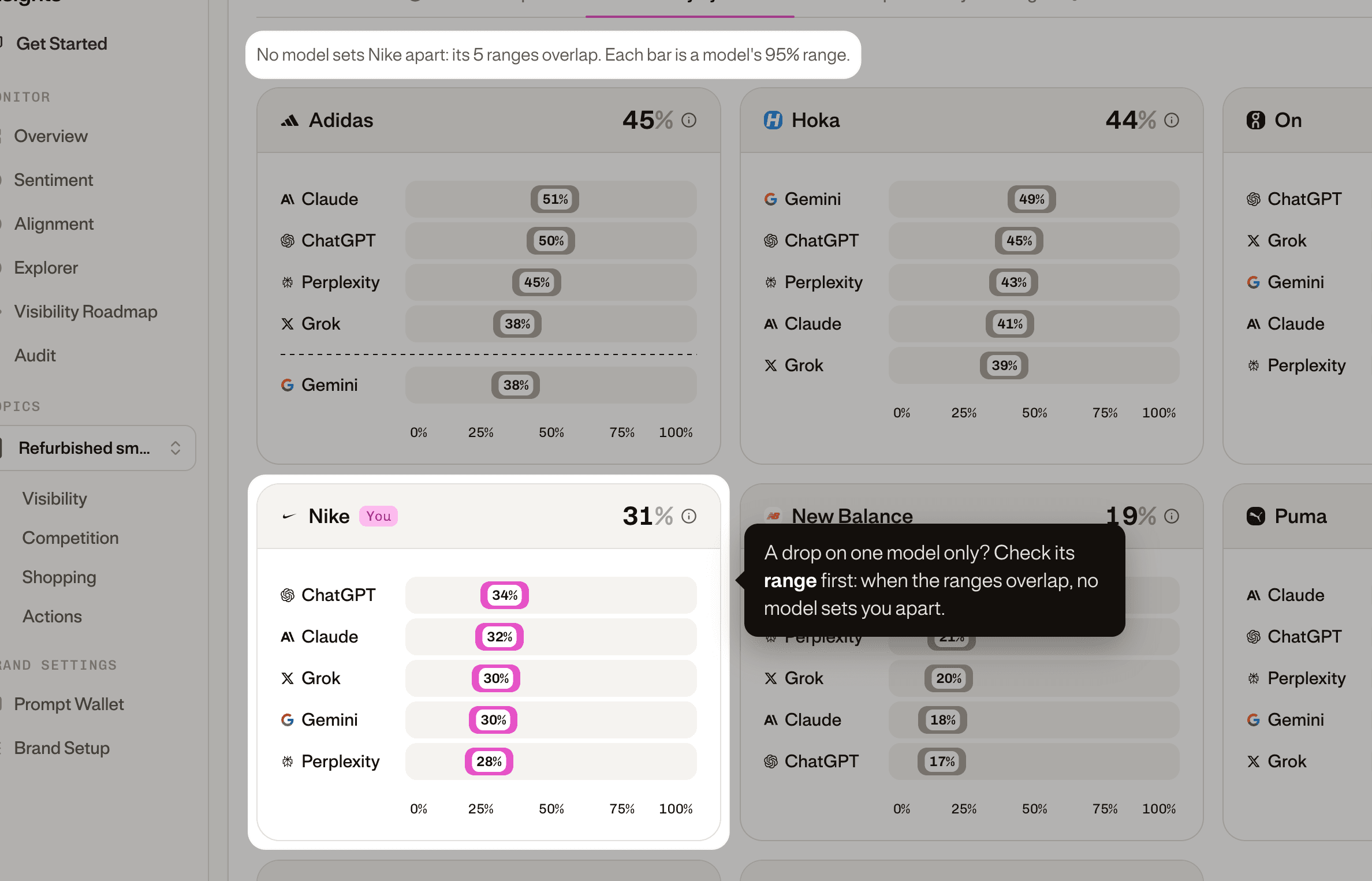
- Drop on one model only — almost always a source problem for that model. The other models still cite you because their source mix is different. Open the Sources view filtered to the affected model and look at which third-party domains now dominate.
- Drop across every model — broader: usually content gone stale, a question that shifted in phrasing, or a competitor that genuinely gained authority everywhere.
- Drop on a model that uses live web search but not on the others — fresh-content signal. The web has new pages on the topic that don't include you yet.
Identifying the model that moved is half the work — it tells you where to focus content and outreach.
A cadence that turns the dashboard into a plan
The right cadence keeps you ahead of drops instead of reacting to them.
- Weekly — anticipate and observe. Open the topic, read the verdict and the Sentinel markers, note any possible move. No action yet; this is the early-warning loop.
- Monthly — plan and act. Pick the one topic × one model with the clearest confirmed drop, decide what content to write or which source to pitch, and ship it. One thing per month, done well, beats five things half-done.
- Quarterly — report to leadership. Roll up the GetMint Score, Share of Voice trend, and the actions you took into a single deck. Show what moved, what didn't, and the bet for the next quarter.
Key takeaways
- 01First check the drop is real: confirmed vs 14 days ago, outside the range, and not on a GetMint Sentinel marker.
- 02Real, sustained drops trace to: a competitor gaining ground, stale content, or a shift in how the question is asked.
- 03The cited sources view is your most actionable clue — look at what competitors' cited pages cover.
- 04Read by model to localize the drop — one-model drops are source problems; cross-model drops are broader.
- 05Cadence: weekly to anticipate, monthly to act, quarterly to report.